
CONTENTS:
- Navigating the ITP Treatment Maze: Vocabulary Helps!
- Watch Video: Are there any complications between ITP treatments and other medications?
Each month, PDSA highlights interesting findings and insightful expert commentary to help enhance your understanding of ITP and partner more effectively with your care team. This month, we share the following:
Navigating the ITP Treatment Maze: Vocabulary Helps!
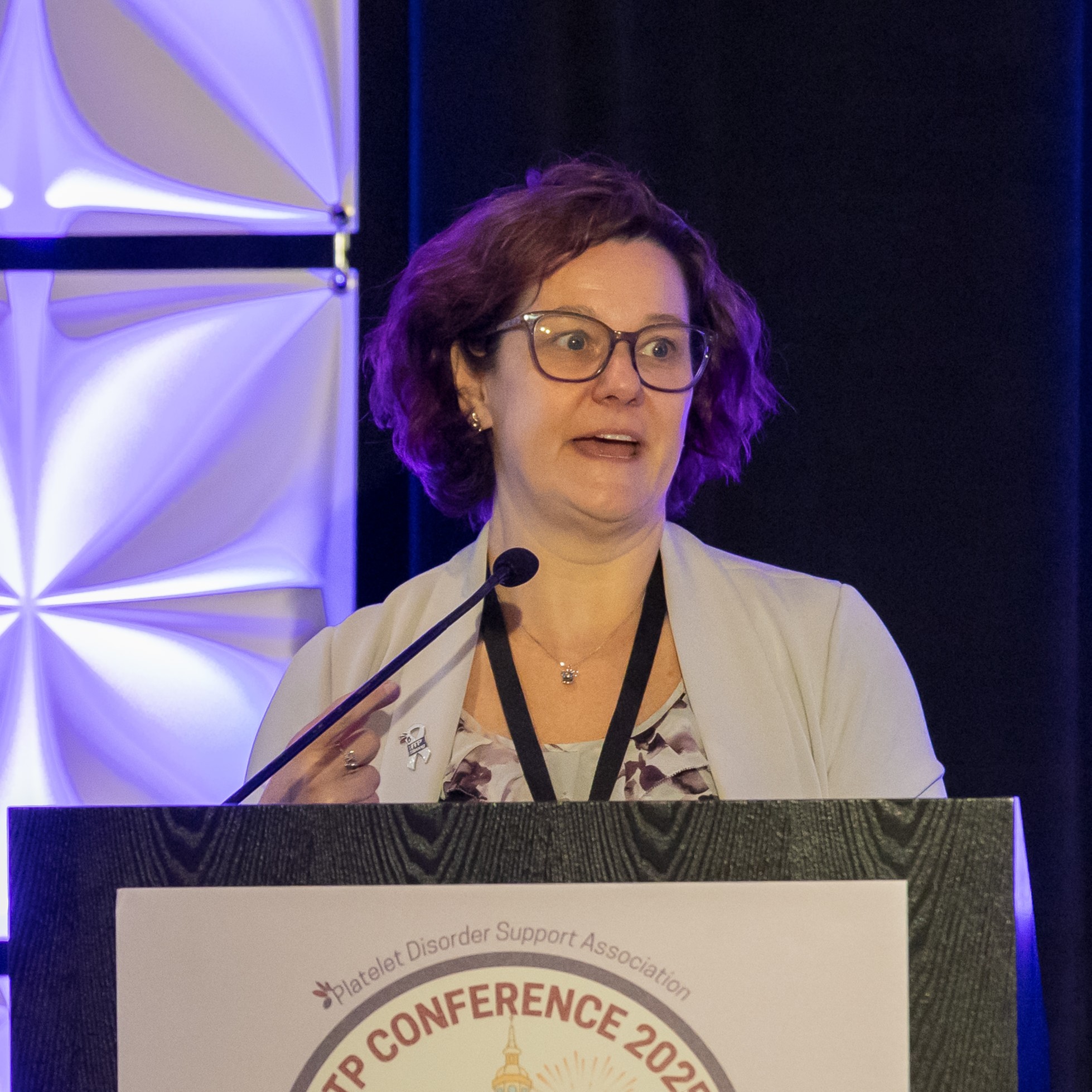 In this month's e-News, PDSA Medical Advisor Michele Lambert, MD, MSTR explores the range of ITP-related treatment options available, including generic drugs, off-label drugs, and biosimilars and focused on what these options mean for patients. These terms can be confusing without clear explanations. Understanding the meaning behind these treatment terms is especially important for individuals managing complex rare disorders like ITP. Dr. Lambert also addresses how the availability of different drug formulations can impact treatment planning and offered practical guidance for navigating this evolving therapeutic landscape.
Most people are familiar with brand-name drugs. Brand-name drugs are the ‘original’ trademark version of a treatment made by the company that first created it. Brand names are like saying Toyota Camry instead of the “midsize sedan.” Over time, different versions of the original brand may be produced. Depending on how similar or how different the new versions are when compared to the original, they may be referred to as a generic or a biosimilar or even have a separate “brand” name.
How does a drug get approved as a “brand name” drug?
Most treatments used for patients (of all types) have gone through “regulatory approval” with the FDA (Food and Drug Administration in the US), EMA (European Medical Agency for the European Union), or similar entity. To be “approved,” a treatment must go through a series of steps, all of which have to be successfully accomplished. First, scientists (most often in a laboratory) find a molecule that they think will work for a specific process. In the US, usually a patent is then filed with the US government to ensure that no one can copy the medication for 17 or more years and then the real work begins to show the molecule is safe and effective.The molecule must be tested in at least two animal species to show that the drug is safe enough for humans to take it. Often, even this process takes years as the researchers work to make sure that this molecule will be safe for humans. Eventually, a medication is tested in a Phase 1 trial where healthy volunteers are given the medication in increasing doses to make sure it is safe. Then, a phase 2 trial is performed (sometimes with the phase 1 trial) to identify a potentially effective dose in patients with the disease being studied. Finally, two phase 3 trials are planned: randomized, double blind, placebo-controlled trials with larger numbers of patients in order to get regulatory (FDA, EMA etc.) approval of the drug in that disease.
Generic Drugs:
Generic drugs are essentially copies of the molecules in the original formulation, once the original company’s patent expires. In other words, generic drugs are replicas of the brand-name drug. To do so, generics must contain the same active ingredients and work in the same way as the original branded medication. They may look different to the eye (like a different color or shape) and usually cost less (hopefully, but not often, a lot less). They are FDA-approved but often do not undergo any kind of comprehensive clinical testing the way the original brand name drug did. Said otherwise, generics are “chemically identical” to the original drug in strength, dosing, route of administration (taken by mouth vs injection for instance). For example, eltrombopag olamine (brand names Promacta/Revolade) is a drug commonly used to treat ITP that is now available as a generic (eltrombopag olamine, Camber pharmaceuticals). This generic form is dosed in the same way as Promacta/ Revolade. This medication formulation has not had to undergo the same number of clinical studies to show its effect is the same but the manufacturer does need to demonstrate that it’s essentially the same medicine.Biosimilar Drugs:
These are copies of complex biologic drugs such as proteins, antibodies, or other large molecules. However, they are not exact copies because these molecules are harder to replicate perfectly. Consequently, biosimilars must demonstrate that they behave in the same way in the body as the original biologic drug, e.g. undergo clinical trials even if much more limited than the ones used to approve the original brand name product. They follow an abbreviated FDA approval process because, while the active medical ingredient is the same or very similar, some non-active ingredients or parts of the molecule may differ slightly. Examples used in ITP include Truxima, Ruxience, and Riabni, which are biosimilars to Rituximab. They bind to the same target molecule as rituximab but may be different types of antibodies and may even bind to a different part of the molecule.In between these two categories are drugs that are chemically similar to the original molecule and target the same biologic process but are a distinct molecule (like a different salt added to stabilize a molecule). These medications often also get to undergo a shortened FDA/ EMA approval process like a generic or a biosimilar, but they are not complex molecules (like an antibody). They often have different dosing. An example of this is available for eltrombopag olamine which is eltrombopag choline called Alvaiz (Teva pharmaceuticals). For the FDA to approve its use, the manufacturer of only needed to demonstrate their chemical identity to the brand-name drug but did not actually need to establish the safety and efficacy of Alvaiz in large scale clinical trials.
Both generic drugs and biosimilars are used to treat the same condition as brand-named drugs. However, because biosimilars have a more complex composition, the “small” differences mentioned above could have either effects on dosing or minor side effects that need to be considered in clinical practice.
Dr. Lambert then reviewed a few other terms that are important for ITP patients and families to be aware of.
Drugs Used “Off-Label” vs “Indicated to Treat ITP”
“Off-label” means that a drug is being used in a way that has not been officially approved by the FDA. To be used in such a way, the drug must have been approved for another medical condition and thus have been tested for safety in people although with another medical condition. This does not mean that there is no or insufficient evidence for the use of this particular medication in ITP. Rather, it means there is not enough information submitted to the FDA for the FDA to decide on the medication’s approval for that specific use. Usually, this occurs in rare disease because of the time required and difficulty doing large clinical trials for each rare disease. Importantly, an “off-label” medication has generally been considered safe to use in another disorder. If a medication is approved for one disorder, the FDA is typically much more lenient in what it requires to approve that medication for another disorder, but it can still be difficult to accumulate the data to get approval. Generally, the use of “off-label” medications is reasonable, unless there is a reason to think an off-label use is going to put a particular patient at risk for additional complications. For example, many ITP treatments in pediatrics are used ‘off-label’ after they show effects in adults with the same or a very similar condition. Rituximab, a monoclonal antibody, approved by the FDA for other conditions like lymphoma, is a treatment used off-label for both adults and children with ITP.“Indicated” means the drug has gone through the full FDA approval process based on clinical trials and has been shown to be safe and effective for a specific use.
Second-Generation Treatments for ITP:
Finally, Dr. Lambert reviewed the term “second-generation” therapies in her talk. Second generation medicines are a bit different. They are new drugs that are similar to the original brand-name in terms of how they work, but they have been modified at the molecular level to try to improve effectiveness, reduce side effects, or offer other benefits. For example, antibiotics can be “improved” to prevent bacteria becoming resistant to them. In ITP, while there are many thrombopoietin receptor agonists (TPO-RAs), including romiplostim (Nplate), eltrombopag (Promacta/Revolade, Alvaiz), hetrombopag, avatrombopag (Doptelet), and lusutrombopag. These are different from the original thrombopoietin targeting drugs and are considered second-generation thrombopoietin receptor agonists. Another example would be rilzabrutinib, which is a second generation BTK inhibitor (the original is ibrutinib and other second-generation drugs include acalabrutinib and zanubritinib which all have some changes in how selective they are for the receptors).Not all patients respond the same way to different formulations of a drug. What works well with the original version of a drug might not work as well with a generic version. This can include both side effects and efficacy. The reasons for this are unclear but may require more frequent monitoring when a change is introduced. This is one of the reasons why it’s important to know which drug you are taking and how it might differ from similar options; annoyingly, this information may not be available. We suggest that you talk with your healthcare provider about why he/ she thinks a given medication is best for you (always) and whether the suggested treatment is a brand name original drug or a generic, biosimilar, or being used off-label. None of the latter disqualify a treatment per se. They may however make it less clear how much data is available in support of the particular treatment.
Watch Video: Are there any complications between ITP treatments and other medications?
Call to Action:

U.S. Residents: Sign this letter by September 9th, 2026 to ask your Senators and Representatives in Congress to support additional funding for rare blood disorders that would support new ITP initiatives.