
ITP Warrior - Ellen
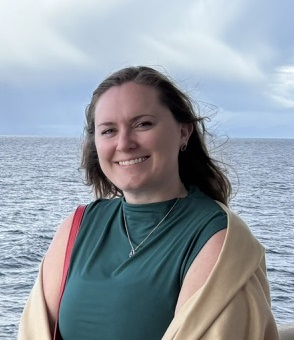
My ITP has occurred in three chapters of my life: first as a child, second as a college student-athlete, and third in the Spring of 2025. Each reoccurrence became slightly more aggressive.
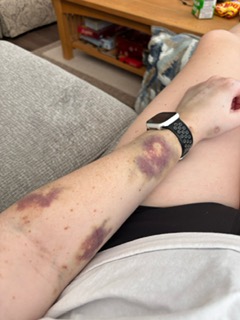
As a child, it pretty much resolved on its own with very little medical intervention. In college, it resolved with various first-line treatment medications such as IVIG and Rituximab, but ultimately ended in a splenectomy that led to its remission. However, this most recent relapse was far more aggressive and resistant. In college, I was a student athlete and played golf. I had started developing abnormal bruising and petechiae that raised concern which led to a blood draw that determined I had low platelets. Then the usual nosebleed that wouldn't stop which led to an ER visit and admission.
We started with IVIG initially paired with oral steroids. I also received Rituxan which raised my platelet levels eventually, but the splenectomy is what kick started my remission and the Rituxan series was what kept things stable. The IVIG wasn't keeping my numbers stable long enough and we weren't seeing immediate results from the Rituxan like the doctor's had hoped so they recommended a splenectomy as they were confident that would put me in remission - which they were right!
At the time, a splenectomy was considered our last remaining option. To the best of my recollection, there were far fewer treatment choices available than there are today. The oral TPO medications that many patients now have access to were not widely available, so treatment largely consisted of infusions and other medications before moving to surgery. Had today's treatment options been available, I believe we would have explored those first and delayed—or possibly avoided—a major abdominal surgery like a splenectomy.
Obviously during this time, I was not participating in my spring golf season which was challenging. The team and my coach were very supportive and would Zoom call me during team meetings or our end of season banquet so that I still felt included. Once I was cleared to start swinging again, I did and was able to be back in full force for the upcoming fall season a few months later!
Fast-forward to 2025, I had been feeling “off” and more and more fatigued in the days leading up to this event along with noticing petechia on my legs. A never-ending nosebleed eventually led me to the ER. They admitted me as my platelets were hovering under 5k. Unfortunately, I wouldn't be leaving the hospital for a month. There were a couple of episodes where I was sent home at the beginning since I was “stable”, meaning my numbers were unchanged (still critically low), but only hours later I would be back in the ER hemorrhaging and re-admitted. My hematologist from my relapse in college took on my case again when she showed up in my hospital room one afternoon. She remembered me from almost 12 years ago. While admitted, I was given the typical first-line treatments (IVIG, high dose steroids, Rituximab) but none of them increased my platelets long enough to get me discharged. We were then told about NPlate and began this in hopes it would start increasing my platelets. During this time, I was essentially bed bound during my near month-long hospitalization. I was encouraged to get up and move but I was too fatigued and weak to make it out of my room safely. I really only had enough energy to sit up in a chair for short periods of time. Most times, I needed physical assistance to get up along with the occasional help of a walker.
Being a healthy 32 year old at the time and seeing myself in this condition was incredibly difficult. When our options ran out, I was transferred by ambulance to one of the top hospitals in the cities where I was then admitted to the Hem/Onc floor and assigned to a team that sees ITP much more often then our local hospital. I was then tested for just about everything you could imagine as the cause for this relapse was still unknown. Every test came back normal. At this point in time, I was just wanting an answer so hearing "negative" or "normal" was a bit of a letdown. However, I was trying to remain positive and focus on the silver linings.
NPlate still hadn't taken effect after almost 3 weeks, but eventually my platelet levels rose to a safe enough level to get me discharged after 4 very long weeks in the hospital. Fast forward a few more weeks, and NPlate stopped working. My platelets went from 1+million to which the medication was stopped per the protocol, down to near 0 in a matter of days. We were back to square one. IVIG became my rescue med but only kept me stable for about 3-4 days before needing another round.
A bone marrow biopsy was performed which determined this was indeed ITP, but very aggressive and still had no known cause. It confirmed my form of ITP wasn’t a production issue but a destruction issue. My hematologist then introduced me to Doptelet. I started seeing and feeling immediate improvements. I went to Mayo Clinic for a 2nd opinion and getting confirmation and reassurance that the steps we had taken thus far were indeed the right ones. I am happy to say I have been stable since starting this medication a year ago and up until just a few weeks ago have stopped it completely after slowly weaning from it over the last few months. I am forever grateful for the medical advancements that were not available in the past that have since given me my life back and (hopefully) soon to be remission.
It took awhile for me to get over the mental hump of this disorder to where it doesn't control my everyday thoughts. I still get some anxiety around blood draws and the “what if’s” creep in, but it's getting better every time. Since discovering PDSA, I have connected with individuals going through the trenches like I did and it has been very healing for me to be a listening ear for them and give them encouragement. I am going to the ITP Conference in SLC this summer and I can't wait to meet other individuals and share our stories. I’m really looking forward to the speakers and having the opportunity to ask the doctors questions. I hope sharing mine gives others hope knowing they aren't alone in their journey!
What lessons, encouragement, or advice would you offer others with ITP?
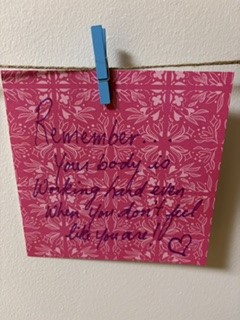
If there is any advice I could give, it would be to stay patient. It won't seem like it's going to end but it will. You will get your life back and you will feel normal again, even if it’s a new normal. Trust your doctors. Trust the science. As my mom would tell me every day, we can do hard things!
Interested in sharing your journey with ITP? Submit your ITP story here. (Full names and contact information will not be shared).