
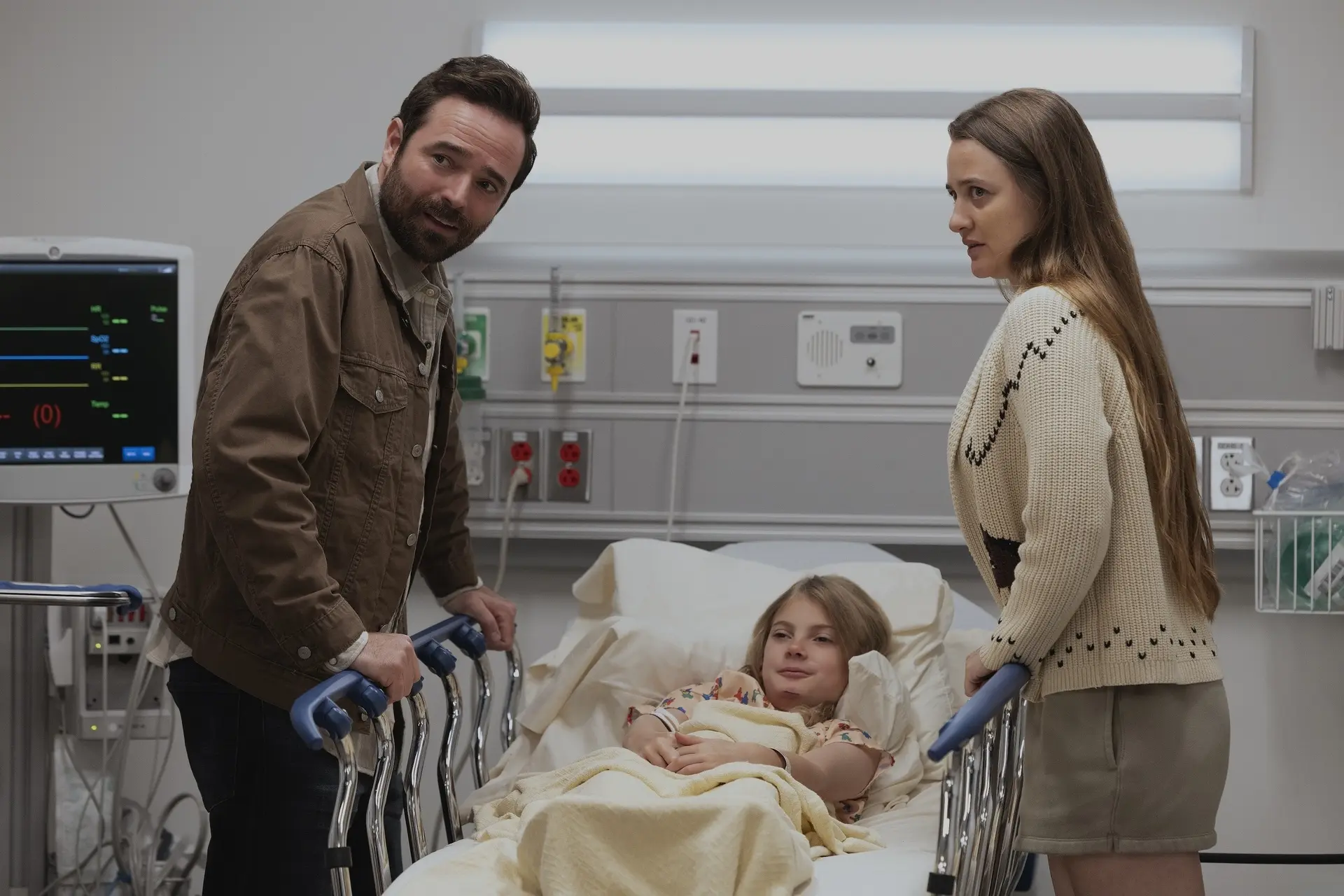
 Patrick Mulvey, Annabelle Toomey, Ino Badanjak. CREDIT: Warrick Page/HBOMAX
The HBO Max medical drama THE PITT, winner of five Emmy Awards including Outstanding Drama Series, continues to spotlight complex and emotionally charged emergency cases. In Season 2, Episode 3, the show follows a busy Fourth of July shift at Pittsburgh Trauma Medical Center—an episode that includes an especially meaningful storyline: the diagnosis of Immune Thrombocytopenia (ITP) in a young patient.
In this episode, 9‑year‑old Kylie Conners arrives at the hospital under the care of Dr. Santos, who initially expresses concern about potential child abuse. The situation intensifies when Kylie’s father, Benny Conners, rushes in, leading to a tense moment with hospital staff. The turning point comes when nurse Dana Evans reviews lab results and announces that Kylie’s platelet level is “only at 9,000,” confirming a diagnosis of ITP. Kylie is admitted for a three‑day stay and begins treatment, including high‑dose steroids.
ITP, or Immune Thrombocytopenia, is a rare autoimmune condition in which the body mistakenly destroys its own platelets—cells essential for normal blood clotting. A typical platelet count ranges from 150,000 to 450,000 per microliter of blood, meaning Kylie’s count of 9,000 is severely below the threshold for safe clotting. At this level, the risk of spontaneous internal bleeding becomes dangerously high, including the possibility of gastrointestinal bleeding or even a life‑threatening brain bleed. By highlighting Kylie’s diagnostic journey, THE PITT offers viewers a window into the real‑life urgency and challenges of identifying and treating this condition.
While the episode centers on the emotional escalation surrounding Kylie’s arrival in the ER, a far too familiar experience for many patients and families living with ITP, it also grounds the storyline in medical reality through accurate diagnostic cues and treatment steps. PDSA welcomes this portrayal, as it helps broaden public awareness and understanding of ITP in children. “When rare conditions like ITP appear on television, it opens doors for education and understanding,” said PDSA President and CEO Caroline Kruse. “For anyone seeing their own family in Kylie’s story, please know PDSA is here for you—with information you can trust and a community ready to walk alongside you.”
The impact of the episode is already reflected in early viewer discussions, where members of the ITP community have shared how closely the storyline resonated with their own lived experiences. Early online reactions show that viewers living with ITP felt deeply seen by Kylie’s storyline. Several long‑term patients shared that the episode captured the shock, fear, and urgency of an unexpected diagnosis — experiences they recognized from their own ITP journeys. Others appreciated that the show brought visibility to a condition that is often misunderstood or overlooked. At the same time, some viewers noted that the episode glossed over the long‑term realities of living with ITP, underscoring how important it is for families to have access to trusted information and ongoing support.
With so many viewers seeking clarity and connection after the episode, trusted resources become an essential next step. At PDSA we offer resources for families navigating a new or chronic ITP diagnosis, including education, community support, and expert guidance. For more information, visit pdsa.org.