
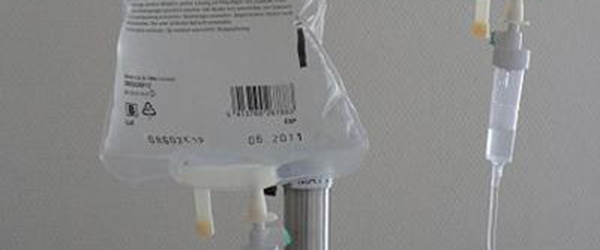
"IV immunoglobin treatment at immune thrombocytopenia diagnosis did not lead to a lower rate of chronic immune thrombocytopenia among children, according to results from a randomized clinical trial.
“This will influence clinical care in daily practice; IV immunoglobin treatment should only be given based on individual patient characteristics, like for toddlers who fall often or teenage girls who have had their menarche in order to stop or prevent bleeding,” Katja M.J. Heitink-Pollé, MD, from the department of pediatric hematology at University Medical Center Utrecht in The Netherlands, told HemOnc Today. “But, we have also shown that observation is a good alternative to IV immunoglobin treatment, information that is particularly useful to counsel parents and patients and for clinicians in low-income countries that cannot afford IV immunoglobin.” "
- From Healio.com

"The Phase 1 data published today in the peer-reviewed Journal of Clinical Investigation highlight the unique design of efgartigimod as an Fc fragment modified by our proprietary ABDEG(TM) technology. The drug candidate's binding properties with FcRn are enhanced by the ABDEG mutation, which may contribute to the differentiated pharmacokinetic and pharmacodynamic activity we saw in the Phase 1 study, as well as its favorable tolerability profile," said Nicolas Leupin, CMO of argenx. "We have launched a broad development strategy to explore efgartigimod in a range of indications mediated by pathogenic IgGs to further our understanding of its mechanism of action and evaluate whether FcRn blockage translates into clinical improvements in severe autoimmune diseases."
The Phase 1 data published in JCI show that the FcRn antagonist efgartigimod was observed to have a favorable tolerability profile and led to a specific, profound and sustained reduction of total immunoglobulin G (IgG) levels. In healthy volunteers, multiple doses of efgartigimod lowered IgG levels on average by approximately 75% with levels returning to baseline approximately eight weeks following the last administration. Efgartigimod was observed to be selective to IgG and did not affect the homeostasis of albumin or immunoglobulins other than IgG."
- From argenx SE press release

"The FDA has accepted Novartis’ supplemental New Drug Application (sNDA) and granted Priority Review designation to Promacta (eltrombopag) in combination with standard immunosuppressive therapy (IST) for first-line treatment of severe aplastic anaemia (SAA), a rare and serious blood condition.
Priority Review designation is used for treatments that address a serious or life-threatening disease or condition and, if approved, would provide a significant improvement in treatment safety or efficacy."
- By Linda Banks, pharmaphorum.com.

"One young man is on a mission to gather as many power chords as possible for children who are hospitalized.
It's called Power Jacks, which only makes sense because it was created by 13 year-old Jack Lewy.
Lewy is no stranger to Tulane Lakeside Hosptial for Women and Children in Metairie.
In December, Lewy suffered from nose bleed that lasted over four hours.
Soon after, he was diagnosed with an auto immune disease called ITP, or Idiopathic Thrombocytopenic Purpura."
- By WGNO.com. Photo courtesy WGNO.

"Novartis Korea said Tuesday additional data analysis from its EXTEND clinical trial for Revolade (ingredient: eltrombopag) proved it safe and effective for those 65 years and older with idiopathic thrombocytopenic purpura (ITP).
The sub-set study findings were presented at the first International Congress of BMT symposium held in Seoul on Aug. 26.
Revolade (known as Promacta in the U.S.) was developed by GlaxoSmithKline (GSK) and transferred to Novartis노바티스 when it acquired the former’s oncology portfolio."
- By Marian Chu, Korea Biomedical Review

"Protalex, Inc., a clinical-stage biopharmaceutical company, today announced that following a planned interim analysis of data from the second dose cohort of its European Phase 1b study of PRTX-100 in adults with persistent/chronic Immune Thrombocytopenia (ITP) (PRTX-100-203 Study), the Company has initiated enrollment in the third cohort of this dose-escalating study. The first patient in the third cohort was recently dosed at 12.0 µg/kg, double that of the second dose cohort of 6.0 µg/kg. PRTX-100 has been granted Orphan Drug Designation in the U.S. and in Europe for the treatment of ITP."
- From Protalex press release

"Protalex, Inc., a clinical-stage biopharmaceutical company, announced today that the U.S. Food and Drug Administration (FDA) Office of Orphan Products Development (OOPD) has awarded the Company a $403,000 grant to support future clinical development activity of PRTX-100 as a treatment for Immune Thrombocytopenia (ITP). The goal of FDA's OOPD Orphan Products Clinical Trials Grants Program is to encourage the clinical development of new drugs for use in rare diseases or conditions where no current therapy exists, or where the candidate drug will be superior to the existing therapy.
PRTX-100 is a highly purified form of Staphylococcal protein A (SpA), which is an immunomodulatory protein known to modify aspects of the human immune system. PRTX-100 is a new generation immunomodulatory therapy and has been granted Orphan Drug Designation as a potential treatment for ITP in both the U.S. and Europe.
Protalex is currently enrolling patients into two Phase 1/2 dose-escalating studies of PRTX-100 as a potential new treatment for ITP at several sites in the U.S. (the 202 Study) and in Europe (the 203 Study) and has so far seen patients in each completed lower dose cohort achieve a protocol-defined platelet response.""
- From Protalex Press Release
"Scientists have long believed that in ITP, the body’s attacks on platelets originated mainly in the spleen mediated by autoantibodies, and in about 70 percent of ITP cases, immune suppression and removal of the spleen controls the condition. But in the remaining 30 percent of patients, symptoms persist.
In this new study, OMRF scientist Lijun Xia, M.D., Ph.D., who holds the Merrick Foundation Chair in Biomedical Research at OMRF and heads the foundation’s Cardiovascular Biology Research Program, and his team used an experimental model with platelets that carried an aberrant version of O-glycans, sugars that the body produces. Specialized cells in the liver quickly cleaned up these platelets as abnormal cells—resulting in a drop in platelet counts.
“Until now, the spleen has been considered the major site for platelet clearance,” said Xia. “But these glycans-deficient platelets exhibited a shorter lifespan and were being cleared from the liver instead.” "
- From omrf.org
"On June 22nd, the Senate released the Better Care Reconciliation Act (BCRA), an amended version of the American Health Care Act (AHCA) that passed the House in May.
If enacted, the bill will harm rare disease patients by cutting hundreds of billions of dollars from Medicaid, and removing key pre-existing condition protections.
Under the BCRA, the Medicaid program will lose hundreds of billions of dollars of Federal funding by capping Federal payments to your State’s Medicaid program. While disabled kids are exempt from these caps, adults with rare diseases might lose access to specialists, orphan therapies, and other necessary care. Additionally, your state’s Medicaid program will still need to cut corners wherever they can, including with waiver programs for home-based care and other special eligibility programs.
Furthermore, the bill allows your State to repeal the Essential Health Benefits. This would leave rare disease patients with wholly inadequate coverage, bring back annual and lifetime limits for children and adults with rare diseases, and remove any protections against bankrupting out-of-pocket costs."

"Scientists from George Mason University recently isolated a substance in the blood of a Komodo dragon that appeared to have powerful germ-killing abilities.
Inspired by the discovery, they created a similar chemical in the lab and dubbed it DRGN-1.
Tests on mice that were given skin wounds infected with two types of bacteria showed that DRGN-1 had three valuable properties: It punched holes in the outer membranes of both gram-negative and gram-positive bacteria, it dissolved the biofilms that glue bacteria together, and it sped skin healing."
- By Donald G. McNeil Jr. for the NY Times.


Platelet Disorder Support Association
8751 Brecksville Road Suite 150
Cleveland, OH 44141
440.746.9003 | pdsa@pdsa.org
The Platelet Disorder Support Association is a 501(c)3 organization and donations are tax deductible to the fullest extent allowed by law.







© Copyright 1997 - 2026, Platelet Disorder Support Association. All rights reserved.
IMPORTANT!
The Platelet Disorder Support Association does not provide medical advice or endorse any medication, vitamins or herbs. The information contained herein is not intended nor implied to be a substitute for professional medical advice and is provided for educational purposes only. Always seek the advice of your physician or other qualified healthcare provider before starting any new treatment, discontinuing an existing treatment and to discuss any questions you may have regarding your unique medical condition.